
Yes – for many menopausal women, adding back hormones can slow down hair thinning. By boosting estrogen (and often progesterone) levels, HRT tends to restore the balance that keeps hair follicles strong. In practice, doctors see many patients notice less shedding and fuller regrowth within months of starting HRT. The extra estrogen helps keep hair in its growing phase longer, and progesterone can block DHT (a male hormone that shrinks follicles).
However, it’s not a guaranteed fix for everyone. Results vary by person and by HRT type. Some forms of HRT (especially certain synthetic progestins) can actually make thinning worse. Importantly, HRT is prescribed for menopause symptoms, not as a hair-loss drug. It can help hair as a side benefit, but doctors usually balance it against other health needs. With that in mind, let’s dig into why hair changes happen in menopause, how HRT might help, and what else you should know.
Hair changes during menopause are very common. In fact, research finds that over half of women in their 50s report noticeable thinning or hair loss after menopause. This happens because estrogen and progesterone levels fall, leaving more of the body’s male hormones (androgens) like testosterone and DHT in play. Estrogen normally keeps hair in its growth phase longer, so when estrogen drops, more hairs shift into the resting/shedding phase. At the same time, with less estrogen to oppose them, DHT can “miniaturize” follicles (shrinking hairs). The result is finer, fewer hairs – a wider part line, less ponytail volume or more hair on your brush. Although upsetting, this pattern is a natural effect of menopausal hormones.
How HRT Can Help Hair Loss
Hormone therapy works by restoring the hormones that support hair. For example, raising estrogen levels with HRT lengthens the hair’s anagen (growth) phase, giving scalp hairs more time to grow before they shed. Progesterone (usually given alongside estrogen) inhibits 5α-reductase, the enzyme that converts testosterone into DHT. In other words, it directly cuts down the DHT that would otherwise thin hairs.
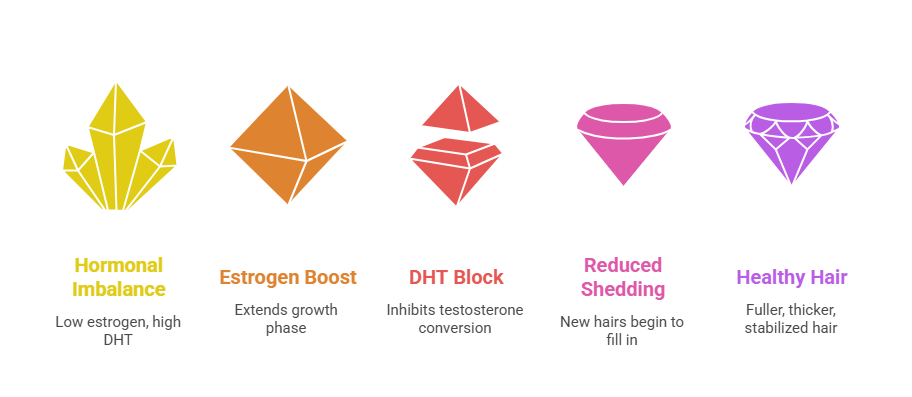
- Boosts growth phase. Estrogen in HRT extends hair’s active growth period. Clinical studies suggest estradiol HRT can improve hair density and follicle size over time.
- Blocks excess DHT. Progesterone in HRT naturally blocks the conversion to DHT. Less DHT means follicles stay larger and hairs remain thicker.
- Reduces shedding. Many women find that shedding slows down a few months after starting HRT. Over 3–6 months, new hairs begin to fill in. Full effects can take closer to a year, but the key point is that hormone therapy can stabilize hair thinning and often improve volume.
In short, HRT can create a friendlier environment for hair to grow. Doctors and patients report healthier, fuller hair once hormone levels are back in balance. (Remember, though, that HRT is treating the hormonal cause – not each hair follicle directly.)
Important Considerations
- Not a targeted hair treatment. HRT is mainly prescribed for menopause symptoms (hot flashes, bone loss, etc.), not just for hair. The hormone doses are chosen to help your overall health, so they may not fully reverse every bit of thinning. It may support and protect your hair, but it’s not used by itself as a hair-loss cure.
- Individual response varies. Some women notice significant improvement, while others see little change. Genetic factors and the exact causes of your hair loss play a role. There’s no guaranteed way to know who will benefit most.
- Watch for the wrong type of HRT. In some cases, HRT can actually make shedding worse. For example, certain synthetic progestin pills have androgen-like effects that can thin hair. If hair loss accelerates on a given regimen, doctors often switch to a different form (such as transdermal estrogen or bioidentical progesterone) which is usually gentler on hair.
- Give it time. Hair grows slowly – about 1–2 cm per month. If HRT helps, you may not see any change for 3–4 months. Expect to wait 6–12 months for a clear difference. During this time, it’s normal to still lose some hair. Stick with your prescribed dose and check in with your doctor before making changes.
- Balance risks and benefits. HRT has effects beyond hair (positive ones like protecting bones, and potential risks like raising breast cancer risk). Be sure to discuss the pros and cons with your doctor. If hair loss is your main issue, you might use a lower dose or a milder form of HRT aimed at symptom relief.
Tips for Managing Hair Thinning
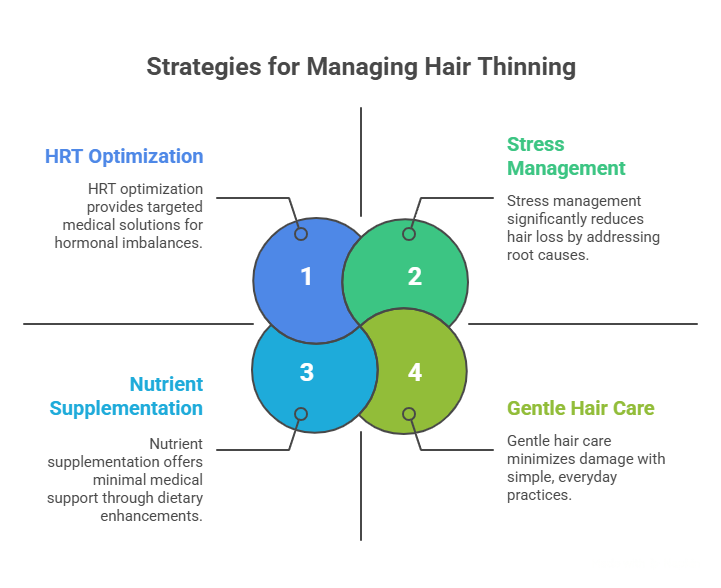
- Talk with your doctor. Don’t be shy about mentioning hair loss during your menopause visit. A good doctor will take it seriously. Bring it up early, so they can consider it when choosing an HRT plan. You might even want to see a menopause specialist or dermatologist for targeted advice.
- Be specific about HRT type. Certain forms of HRT may suit hair better. For example, transdermal estrogen (patches or gel) gives steadier hormone levels and is often gentler on hair than pills. Many women do best with estradiol plus a “natural” progesterone. Ask if a bioidentical progesterone (rather than a synthetic progestin) is an option.
- Check other health factors. Hair loss can have many causes. Ask your doctor to test your thyroid, iron, and vitamin D. Fixing a low thyroid or anemia can itself improve hair. Be sure your diet has enough protein, iron, zinc and vitamins (biotin, etc.) – these nutrients support growth.
- Consider additional treatments. In many cases, doctors will pair HRT with hair-targeted treatments. Topical minoxidil (Rogaine) or low-dose finasteride (under doctor supervision) can help boost regrowth. Some women take supplements aimed at hair health (such as biotin or collagen). Always ask your doctor before adding anything new.
- Gentle hair care. Avoid harsh styling, heat, tight ponytails or chemical treatments, which can accelerate breakage. Use a mild shampoo and keep your scalp clean. Scalp massage or gentle exfoliation can stimulate blood flow. Give your hair a little TLC (deep conditioning, avoiding tight clips) while it’s vulnerable.
- Manage stress. Stress (and lack of sleep) can worsen shedding. Finding ways to relax – whether it’s exercise, meditation, or hobbies – can indirectly help. Some women notice that when menopause triggers stress, it also triggers extra hair loss, so reducing stress may lessen sudden sheds.
Bottom Line
For many women, hormone replacement does help slow down the hair thinning that comes with menopause. By restoring estrogen (and progesterone), it creates a healthier setting for hair to grow. But it’s not a guaranteed “cure.” You’ll still need patience, good nutrition, gentle care, and maybe complementary treatments.
The best approach is a team effort: work with your doctor (and possibly a dermatologist or trichologist) to tailor HRT for your needs. Tell them about your hair loss, and they can adjust your therapy or add hair-friendly strategies. With the right plan and a bit of time, you can often protect and improve your hair during menopause.