
You might wonder if those tangy pickled onions are actually good for your digestion. The answer is yes – they can be, especially when prepared the right way. Naturally fermented pickled onions are packed with live probiotics (friendly bacteria) that help balance your gut flora. Even vinegar-based pickles (quick-pickled onions) still offer gut-friendly perks: they contain inulin fiber and acetic acid to feed and stimulate your digestive system. In short, pickled onions can support gut health when you choose low-sodium, fermented versions and enjoy them in moderation. In fact, one nutrition guide notes that pickled onions “retain antioxidants like quercetin, support digestion via vinegar and prebiotics, and may help regulate blood sugar”.
Not only are pickled onions flavorful, they’re also nutritious. Red onions (commonly used for pickling) are high in fiber and contain antioxidants like quercetin. Quercetin is anti-inflammatory, which is great for your gut lining. The onions themselves have inulin – a prebiotic fiber that feeds good gut bacteria. In other words, a jar of these bright pink pickles can do more than spice up your meal – they literally nourish your digestive system.
Probiotics vs. Prebiotics
Pickled onions can offer both probiotics (if fermented) and prebiotics. Fermented pickled onions (made with just salt and water) develop live cultures of bacteria, just like sauerkraut or kimchi. Eating these adds friendly microbes to your gut. On the other hand, quick-pickled onions made with vinegar have no new bacteria, since the vinegar halts fermentation. However, vinegar pickles still feed your microbiome: they retain the onion’s inulin fiber, nourishing the beneficial gut flora. Plus, the vinegar itself is helpful – acetic acid can boost stomach acid and enzyme activity, improving digestion.
Key Gut Health Benefits
Pickled onions can support your gut and overall health in several ways:
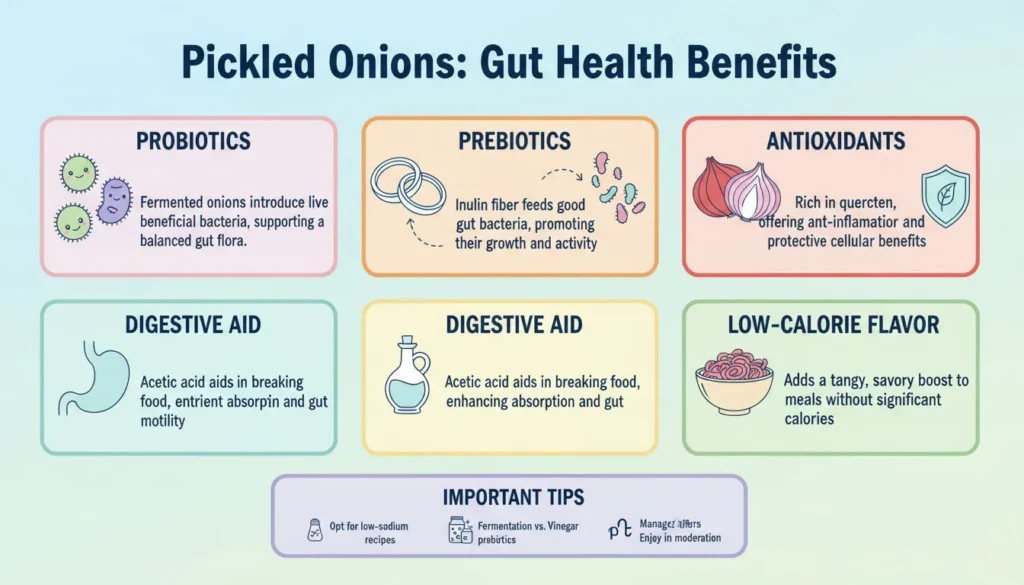
- Probiotic boost: Naturally fermented pickled onions introduce live beneficial bacteria to your gut. This helps maintain a balanced microbiome.
- Prebiotic fiber: Onions are rich in inulin (a type of fiber) that feeds friendly gut bacteria. This encourages a thriving gut environment.
- Antioxidants: Red onions supply quercetin and other flavonoids, which combat inflammation in the digestive tract. Less inflammation means a healthier gut lining.
- Digestive aid: The vinegar (acetic acid) in pickles can stimulate digestive juices and enzymes. It may also slow carbohydrate digestion, helping to control blood sugar levels after a meal.
- Low-calorie flavor: Pickled onions add bold taste to foods for very few calories, making veggies and whole grains more appealing (so you eat better overall).
Important Considerations
While pickled onions have perks, keep these points in mind:
- Sodium content: Many store-bought pickled onions are very high in salt (sometimes 500mg+ per serving). Too much sodium can affect blood pressure. If salt is a concern, either make your own with less salt or rinse them before eating.
- No live cultures (unless fermented): Vinegar-based pickles taste tangy but don’t provide probiotics. Check labels for words like “live cultures,” “unpasteurized,” or “contains probiotics” if you want the fermented kind.
- Added sugars: Some recipes add sugar to balance the tartness. Too much added sugar can offset the health benefits. Opt for no-sugar-added recipes when possible.
- Acidity: The vinegar makes pickled onions acidic. Eating a lot can cause heartburn or digestive discomfort in sensitive individuals. Listen to your body and don’t overdo it.
- Food sensitivities: If you’re sensitive to onions (they contain FODMAPs), fermenting them can reduce these compounds. An animal study even found fermented onions helped reduce gut inflammation in a colitis model, while raw onions made it worse. This hints that fermentation may make onions gentler on the gut for some people.
How to Enjoy Pickled Onions
The great thing about pickled onions is how easy they are to use. Top salads, tacos, sandwiches, or grain bowls with a spoonful of pickled onions for a zesty crunch. You can also make them at home quickly:
- Slice: Thinly slice red onions and pack them into a clean jar.
- Brine: Mix vinegar (apple cider vinegar is popular), water, sea salt, and optional sugar or spices. Heat just enough to dissolve the salt and sugar.
- Combine: Pour the brine over the onions, covering them completely. Seal the jar and refrigerate.
- Wait: For quick pickles, they’re ready in about 30 minutes to an hour. For real probiotics, let them ferment 3–7 days in the fridge (omit vinegar and use a salt-water brine instead).
- Store: Refrigerated pickled onions keep about 2–4 weeks. Use them as a colorful, tangy garnish whenever you like.
Making your own lets you control salt and sugar, and you can experiment with flavors (garlic, peppercorns, herbs, jalapeños, etc.). If you prefer ready-made, look for refrigerated jars labeled “naturally fermented” or make sure they contain live cultures.
Pickled onions are a simple, tasty way to boost gut health when used smartly. They deliver fiber, nutrients, and (if fermented) probiotics, all while making meals more exciting. Just be mindful of salt and acidity, and savor them as part of a balanced diet. Whether you snuggle them into your burgers or stir them into salads, your gut (and your taste buds) will thank you!