
If you have stubborn muscle knots, a doctor might suggest a trigger point injection to ease the pain. You’re probably wondering: how long will that relief last? In most cases, people start feeling better within 1–3 days of the injection. On average, the pain relief from one trigger-point shot lasts about 4 weeks (around one month). Several studies agree on this timeframe. For example, the Cleveland Clinic notes that pain relief typically kicks in within 24–72 hours and lasts roughly a month, and a pain clinic reports an average duration of about 30 days.
That said, every person is different. Some folks only get a few days of relief, while others enjoy months of comfort. In fact, one report says results can range from just a couple of days to many months. If the injection is done alongside physical therapy and you address the root cause of the muscle pain, the relief can last even longer. Hospital for Special Surgery explains that in the best cases (with rehab and underlying issues resolved), the benefits could theoretically be permanent. More commonly, though, even chronic pain patients can see a good 2–3 months of relief before needing more treatment.
What to Expect: Immediate and Short-Term Relief
Right after the shot, you’ll often notice instant numbing. That’s the local anesthetic (like lidocaine) at work: it can calm the pain almost right away, sometimes within minutes. This fast numbing effect usually lasts a few hours or days. If your injection includes a steroid (cortisone), it acts more slowly. The steroid gradually reduces inflammation over the next day or two and can take up to a week for full effect. Together, this means you may feel a lot better the same day, with comfort continuing to improve over the following days.
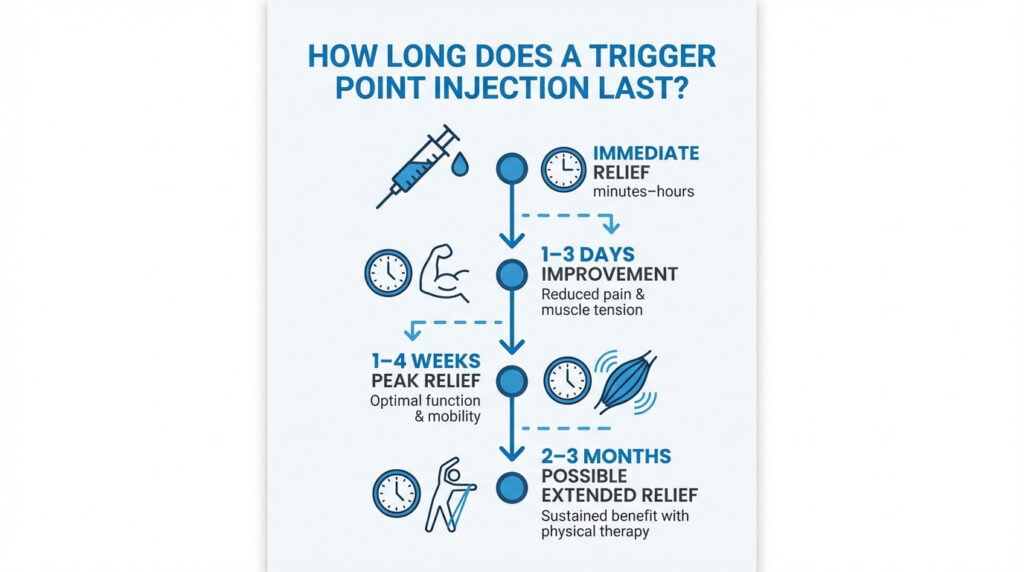
Typical Timeline:
- First hours–days: The numbing medicine kicks in, often giving immediate relief. You might feel a “tingling” or numbed sensation in the muscle.
- Next few days: The steroid component starts reducing swelling and tightness. You’ll usually notice significant improvement in 1–3 days.
- 1–4 weeks: Pain is usually much less or gone entirely. This is when most of the average one-month relief is experienced. During this pain-free window, physical therapy or gentle stretching is often most effective.
Keep in mind, these timelines can overlap and vary. Some people feel nearly normal within a day, while others only notice gradual change. The key is that you’ll generally have a pain-free period where the muscle is reset, thanks to the shot.
Typical Duration of Relief
About a month on average. In simple terms, the relief usually lasts several weeks. After that, the pain may slowly creep back.
Variations: Many factors can stretch or shorten this period. Some patients report only a week or two of relief, especially if the muscle issue is very severe. Others remain symptom-free for 2–3 months or more. For example, Interventional Pain Consultants notes that for recurring trigger points, relief often lasts 3–6 months before another injection is needed.
Factors That Affect How Long Relief Lasts
- Injection medicine: The type and dose make a difference. Most trigger-point shots contain a numbing drug (lidocaine) and sometimes a steroid (cortisone). Lidocaine works fast but wears off quickly, while cortisone fights inflammation more slowly and can prolong the effect. Injections with a steroid often give a longer-lasting relief than anesthetic alone.
- Severity of the condition: If the muscle is very damaged or tight from a long-term problem, the relief may wear off sooner. In contrast, a minor muscle knot often responds longer. One clinic notes that “the severity of the injury or condition can affect how long the medication lasts”.
- Physical therapy and exercise: Following the shot, engaging in guided stretching or PT can help fix the underlying issue. Combining the injection with therapy often leads to longer relief. For example, HSS experts say that if you use the injection as part of a rehab plan, you may keep the pain away much longer.
- Overall health and habits: Poor posture, stress, and lack of sleep can keep muscles tight. Managing stress, maintaining good posture, and staying active can support longer relief. Conversely, continuing the same pain-causing activities will bring the knot back faster.
- Injection plan: Doctors sometimes schedule multiple injections spaced weeks apart (for chronic problems). For instance, some recommend one injection every 6–8 weeks over a few months to maintain relief. Still, each shot’s effect lasts roughly the same timeframe before the next one is due.
Understanding these factors can help you work with your doctor to make the relief last longer. For example, if your first injection only helped a short time, adding exercises or adjusting your workplace ergonomics might improve the next round’s effect.
After the Injection: What to Do
Right after a trigger point shot, you can generally resume your normal activities right away. There’s no need for sedation or a long recovery. In fact, most people can drive themselves home since the procedure only numbs the muscle locally. You should be careful, though: avoid heavy lifting or very strenuous workouts for a day or two. This is just to let the area calm down and to prevent injury, especially if the muscle is still numb.
Quick tips:
- Go home and keep moving gently. You don’t have to stay in bed. Light activity is fine, and sometimes doctors even coordinate the shot with a physical therapy session the same day.
- Skip the tough stuff for a bit. It’s wise to avoid lifting weights or doing an intense gym session for 24–72 hours. The injection may temporarily weaken or numb the muscle, so you could unintentionally strain it.
- Watch for mild side effects. You might feel a little soreness, tenderness, or see a small bruise where the needle went in. This is normal and should fade in a few days. If you feel discomfort, applying ice and taking over-the-counter Tylenol or ibuprofen can help (do these only if your doctor says it’s okay).
- Feel free to drive and work. Since the shot uses only local anesthetic (no general anesthesia), you won’t feel sleepy. You can get back to work or errands right away, just following the “easy does it” rule for heavy tasks.
- Plan follow-up. If your pain starts to return after a few weeks, check in with your doctor. Sometimes they’ll schedule another injection or suggest further treatment.
The bottom line is: a trigger point injection gives you a window of relief. Use that time to stretch, strengthen, or do whatever your therapist recommends for the muscle. This can help make the pain-free period last as long as possible.
Summary
In summary, trigger point injections typically provide relief for a few weeks to a month. Many patients start feeling better in 1–3 days and stay mostly pain-free for around 4 weeks. However, it’s normal for this to vary. With healthy habits and therapy, some people get 2–3 months of benefit, and in rare cases even longer. If the pain comes back, it just means the shot wore off – you can talk to your doctor about another injection or complementary treatments. The key is to view the injection as part of a broader plan: combine it with exercises and good self-care. That way, when the trigger point injection does wear off, you’ll have stronger muscles and better habits to help keep the pain away.