
A food allergy is an immune system reaction that can be life threatening, while a food sensitivity is a delayed, non-dangerous response that primarily causes digestive and inflammatory symptoms. The two conditions involve completely different biological mechanisms, require different testing, and call for different treatment approaches. Understanding which one you’re dealing with is the first step toward feeling better and protecting your health.
Many people use these terms interchangeably, but they aren’t the same thing. And there’s actually a third category, food intolerance, that gets lumped in as well. Knowing the difference matters because a true food allergy can put you in the emergency room, while a food sensitivity might be the reason you’ve been dealing with bloating, brain fog, or skin flare ups for months without knowing why.
How Food Allergies Work
A food allergy triggers your immune system to produce IgE antibodies against a specific protein in food. The first time you eat the food, your body may silently create these antibodies. The next exposure is when things get serious. Those IgE antibodies signal mast cells to release histamine and other chemicals, causing symptoms that can range from mild hives to full blown anaphylaxis.
According to FARE (Food Allergy Research & Education), approximately 33 million Americans have at least one food allergy. That includes nearly 11% of adults and about 8% of children. What surprises most people is that nearly half of adults with food allergies developed at least one of them after age 18.
Allergic reactions are fast. Symptoms typically appear within minutes, sometimes up to two hours after eating the trigger food. Even trace amounts can set off a reaction. That’s why cross contamination is such a serious concern for people with food allergies.
The FDA identifies nine major allergens responsible for over 90% of serious allergic reactions in the United States: milk, eggs, peanuts, tree nuts, fish, shellfish, wheat, soy, and sesame. Shellfish is the most common allergen in adults (affecting 8.4 million people), while peanut is the most common in children.
Signs of a food allergy include hives, swelling of the lips, tongue, or throat, difficulty breathing, dizziness, nausea, and in severe cases, anaphylaxis. Anaphylaxis requires immediate epinephrine and emergency care. FARE reports roughly 3.4 million ER visits per year for food allergy reactions in the U.S. alone.
What Makes Food Sensitivity Different
Food sensitivities operate through a completely different pathway. They don’t involve IgE antibodies and they won’t cause anaphylaxis. The exact mechanism is still being studied, but sensitivities appear to involve inflammatory immune responses that are slower and less dramatic than an allergic reaction.
The biggest difference is timing. While allergy symptoms hit within minutes, food sensitivity symptoms can take anywhere from a few hours to several days to appear. This delay is exactly what makes sensitivities so difficult to identify. You ate something on Monday that’s causing your headache on Wednesday, and you’d never connect the two without a structured approach.
Sensitivities are also dose dependent. A small amount of dairy might not bother you at all, but a large serving could trigger symptoms. That’s the opposite of a true allergy, where even a tiny amount of the trigger food can cause a reaction.
The symptom list goes well beyond digestive issues. While bloating, gas, cramping, diarrhea, and constipation are common, food sensitivities can also cause headaches and migraines, brain fog, chronic fatigue, joint pain, skin problems like eczema and acne, mood changes including anxiety and irritability, and stubborn weight that won’t respond to diet and exercise.
Common triggers include dairy, gluten and wheat, eggs, soy, corn, food additives, artificial sweeteners, and high FODMAP foods. It’s estimated that 20% to 30% of the population deals with some form of food sensitivity or intolerance.
Food Intolerance: The Third Category Most People Miss
Food intolerance is often confused with food sensitivity, but it’s a distinct condition. Intolerances aren’t immune mediated at all. They happen when your body lacks the enzymes needed to properly digest a specific food component.
Lactose intolerance is the most familiar example. Your body doesn’t produce enough lactase, the enzyme that breaks down lactose in dairy products. The undigested lactose ferments in your gut, causing gas, bloating, and diarrhea. It’s uncomfortable, but your immune system isn’t involved.
Histamine intolerance is a lesser known but increasingly recognized form of food intolerance. It occurs when the body can’t adequately break down histamine from food, typically due to low levels of diamine oxidase (DAO), the enzyme responsible for metabolizing dietary histamine. Research estimates histamine intolerance may affect 3% to 6% of the population. Symptoms can mimic both food allergy and food sensitivity, including bloating, headaches, skin flushing, nasal congestion, and even rapid heart rate. High histamine foods include aged cheeses, cured meats, fermented vegetables, wine, and certain fish.
Other types of intolerance include FODMAP intolerance (fermentable carbohydrates that cause digestive distress), fructose intolerance, and sulfite sensitivity. Celiac disease, while often grouped with intolerances, is actually an autoimmune condition triggered by gluten that damages the small intestine. It requires its own specific diagnosis and management.
Food Allergy vs Food Sensitivity vs Food Intolerance: Quick Comparison
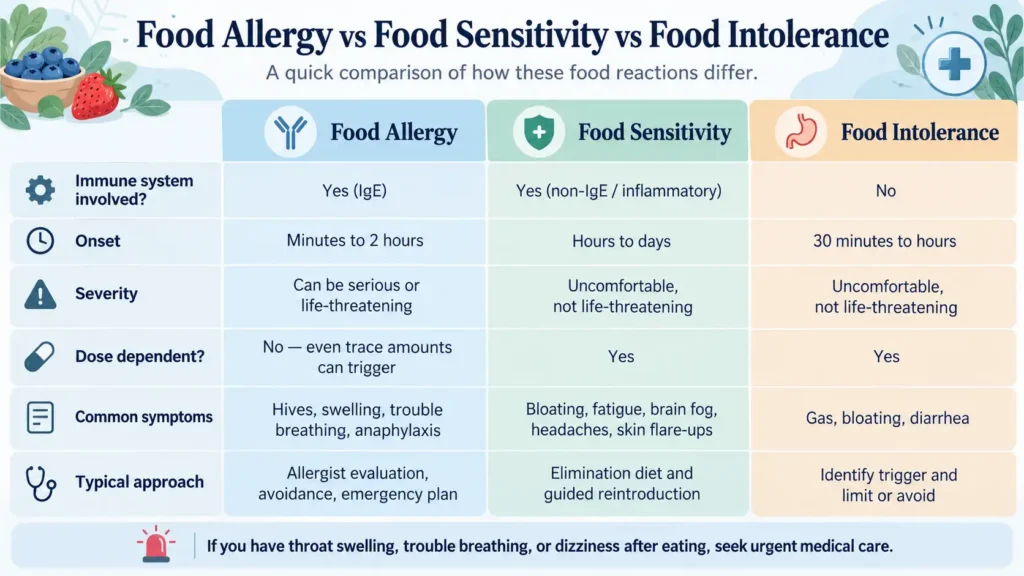
| Food Allergy | Food Sensitivity | Food Intolerance | |
|---|---|---|---|
| Immune system involved? | Yes (IgE antibodies) | Yes (non IgE) | No |
| Onset | Minutes to 2 hours | Hours to days | 30 minutes to hours |
| Severity | Can be life threatening | Uncomfortable, not dangerous | Uncomfortable, not dangerous |
| Dose dependent? | No, trace amounts can trigger | Yes | Yes |
| Common symptoms | Hives, swelling, anaphylaxis | Bloating, brain fog, fatigue, skin issues | Gas, bloating, diarrhea |
| Diagnosed by | Skin prick test, IgE blood test | Elimination diet | Breath test, elimination diet |
| Reversible? | Rarely (some children outgrow) | Often, with gut healing | Manageable, rarely fully reversible |
Why Food Sensitivities Develop: The Gut Health Connection
This is where the conversation goes beyond what most resources cover. Food sensitivities don’t just appear randomly. Research increasingly points to gut health as a central factor in why sensitivities develop, and this connection is something that matters for anyone trying to get to the root of their symptoms.
Your intestinal lining is held together by structures called tight junctions. These act as gatekeepers, allowing nutrients through while keeping larger particles like undigested food proteins out of your bloodstream. When these tight junctions become compromised, a condition often referred to as increased intestinal permeability, food particles can pass through the gut wall and trigger immune responses.
A 2025 review published in Frontiers in Allergy found that a damaged intestinal barrier releases signaling molecules (IL-25, IL-33, and TSLP) that push the immune system toward overreactive responses. The resulting inflammation can then further damage the gut lining, creating a cycle where sensitivities and gut damage reinforce each other.
Your gut microbiome plays a critical role in this process. Beneficial bacteria produce short chain fatty acids like butyrate that support barrier integrity and help maintain immune tolerance to food proteins. When microbial diversity drops, so does your gut’s ability to keep that barrier intact. Studies have shown that people with food reactions often have fewer Bifidobacterium and Lactobacillus species, both of which support immune regulation.
Several factors can disrupt this balance and set the stage for food sensitivities to develop. Antibiotic use, chronic stress, a diet high in processed foods and low in fiber, excessive alcohol consumption, and certain medications can all compromise gut barrier function and microbial diversity. Conditions like SIBO (small intestinal bacterial overgrowth) and dysbiosis are frequently found alongside food sensitivities.
This is why many people notice that their food sensitivities seem to appear out of nowhere in adulthood. A period of high stress, an illness treated with multiple rounds of antibiotics, or hormonal shifts during pregnancy or perimenopause can all alter the gut environment enough to trigger new sensitivities to foods that never caused problems before.
How Food Sensitivities Are Identified
True food allergies are diagnosed through well established medical tests: skin prick tests, serum IgE blood tests, component testing, and in some cases, supervised oral food challenges. If you suspect a food allergy, especially one that involves breathing difficulty or swelling, see a board certified allergist.
Identifying food sensitivities is more nuanced. The elimination diet remains the practical reference standard. The process follows a structured protocol: remove suspected trigger foods for approximately three weeks, then reintroduce them one at a time with a three day waiting period between each food. Keeping a detailed food and symptom diary throughout this process is essential because reactions can be delayed by days.
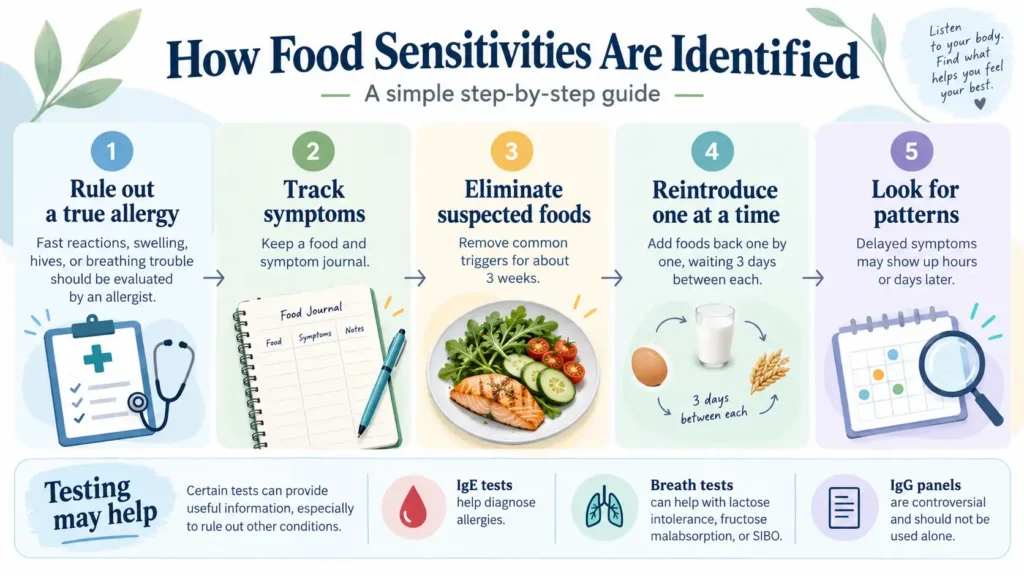
Food sensitivity testing panels, particularly those measuring IgG antibodies, are widely available but come with important context. The AAAAI (American Academy of Allergy, Asthma & Immunology) notes that IgG presence likely reflects normal exposure to food rather than a pathological reaction. Higher IgG4 levels may actually indicate tolerance, not intolerance.
That said, the picture isn’t entirely black and white. A 2025 clinical trial involving over 200 IBS patients found that tailored diets based on IgG testing improved symptoms compared to placebo. In integrative practice, these tests aren’t used as definitive diagnoses. They’re used as a starting point to narrow down which foods to prioritize during a structured elimination, which can make the process less overwhelming than removing everything at once.
Breath tests (hydrogen and methane) can identify lactose intolerance, fructose malabsorption, and SIBO. And celiac disease requires its own specific testing, including blood antibody tests and often an intestinal biopsy, which must be done while you’re still eating gluten.
Can Food Sensitivities Be Reversed?
This is the question most people are really asking, and the answer is encouraging. Unlike food allergies, which tend to be permanent (though some children do outgrow allergies to milk, egg, and soy), many food sensitivities can improve or resolve entirely when the underlying cause is addressed.
The key is gut healing. Research on celiac disease has shown that gluten dependent intestinal permeability switches off once a gluten free diet begins. The same principle applies more broadly: when you remove the trigger, reduce inflammation, and support barrier repair, the gut can heal and tolerance can return.
In practice, this means addressing root causes like dysbiosis, SIBO, or intestinal permeability rather than just permanently avoiding foods. An integrative approach typically includes targeted elimination followed by guided reintroduction, microbiome support through dietary diversity and fiber, treatment for underlying conditions like SIBO, and attention to lifestyle factors like stress and sleep.
The timeline varies, but many practitioners find that foods can be successfully reintroduced after three to twelve months of focused gut healing work. This doesn’t apply to true food allergies. You should never reintroduce a food that has caused an IgE mediated allergic reaction without medical supervision.
If you’re dealing with multiple food sensitivities, chronic digestive symptoms, or unexplained fatigue, brain fog, or skin issues, working with a provider who looks at the full picture, including gut health, microbiome balance, and nutritional status, can help you move beyond just managing symptoms toward actually resolving them.
Frequently Asked Questions
Can a food sensitivity turn into a food allergy?
Generally, no. Food sensitivities and food allergies involve different immune pathways. A sensitivity won’t escalate into an IgE mediated allergic reaction. However, you can have both a food allergy and a food sensitivity at the same time, even to different foods. If you experience any symptoms that involve throat swelling, difficulty breathing, or dizziness after eating, treat it as a potential allergy and seek immediate medical attention.
How long do food sensitivity symptoms last?
Symptoms typically last anywhere from a few hours to several days after eating the trigger food. The delayed onset (hours to days) and extended duration are what make sensitivities so hard to pin down without a structured elimination approach. Keeping a food and symptom journal can help identify patterns.
Can you develop food sensitivities as an adult?
Yes, and it’s actually quite common. Changes in gut health, periods of intense stress, hormonal shifts during pregnancy or perimenopause, courses of antibiotics, and even moving to a new environment can all alter your gut microbiome and immune responses enough to trigger new food sensitivities.
Is IgG food sensitivity testing accurate?
IgG testing is controversial. Major allergy organizations advise against using it to diagnose food allergies or sensitivities because IgG antibodies likely reflect normal food exposure rather than a problem. However, some integrative practitioners use IgG results as one data point alongside clinical history and structured elimination to help guide the process. It shouldn’t be treated as a definitive diagnosis on its own.
Can food sensitivities go away on their own?
Some can, especially if the gut has time to heal. Many food sensitivities are linked to compromised gut health, and when the underlying issue is addressed through dietary changes, lifestyle modifications, and sometimes targeted treatment for conditions like SIBO, tolerance to trigger foods can return. The typical timeline for reintroduction is three to twelve months, depending on the individual.
What’s the difference between food sensitivity and food intolerance?
A food sensitivity involves some level of immune response, even though it’s not the IgE mediated response seen in true allergies. A food intolerance is not immune related at all. It’s caused by enzyme deficiencies or chemical sensitivities. Lactose intolerance (lacking the lactase enzyme) and histamine intolerance (reduced DAO enzyme activity) are classic examples of intolerance rather than sensitivity.
How do I know if I have a food sensitivity or an allergy?
The biggest clues are timing and severity. Food allergies cause symptoms within minutes to two hours, can be triggered by tiny amounts, and can be life threatening. Food sensitivities cause delayed symptoms (hours to days), are dose dependent, and are uncomfortable but not dangerous. If you’re unsure, start with an allergist to rule out true allergies, then explore sensitivity testing and elimination protocols with a provider experienced in functional and integrative medicine.
Can gut health affect food sensitivities?
Absolutely. Research published in Frontiers in Allergy (2024, 2025) shows that intestinal permeability and microbiome imbalances are closely linked to the development of food sensitivities. When the gut barrier is compromised, food proteins can trigger immune responses they normally wouldn’t. Supporting gut health through diet, stress management, and treating conditions like SIBO and dysbiosis can both prevent new sensitivities and help resolve existing ones.