Yes – an unhealthy gut can contribute to acne. Studies show that people with acne often have an imbalance of “good” vs. “bad” bacteria in their digestive tract. In simple terms, your gut and skin are connected by an “inflammatory telephone” called the gut–skin axis. When the gut is happy and balanced, it sends calm, nourishing signals to the rest of the body. But when the gut is out of balance (often called dysbiosis), it can flood the body with inflammation and toxins that trigger breakouts. In the first few paragraphs we’ll give the short answer: yes, bad gut health can cause acne. Then we’ll explain how this happens, what signs to watch for, and simple steps to heal your gut and clear your skin.
How a “Leaky Gut” and Inflammation Trigger Breakouts
Your gut is normally lined by a barrier that keeps bad stuff out. But if “bad” gut bacteria or inflammation damage that barrier, it can become porous – a condition often called leaky gut. In leaky gut, tiny particles like undigested food or bacterial fragments slip into the bloodstream. Your immune system notices these invaders and triggers a big inflammatory response throughout the body. Part of that response plays out on your skin. The Henry Ford Health team explains that toxins from a leaky gut travel to the skin and make it ramp up oil production and inflammation. In other words, your body tries to defend itself by producing more sebum (skin oil), but this often backfires by clogging pores and causing pimples.
Importantly, this type of gut-related acne often shows up over large areas: not just the chin or T-zone, but often across the face, and even the chest or back. For example, one review notes that skin breakouts from gut issues can appear on the forehead, cheeks, or upper back. This is a clue: if your acne flares tend to be widespread or on your back (rather than just a few spots on your chin), it might point to an internal cause like gut dysbiosis or a leaky gut.
Other Gut-Related Acne Triggers
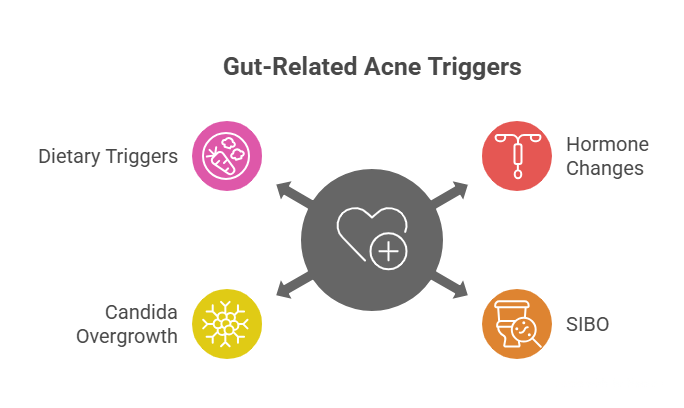
Along with leaky gut and general inflammation, there are a few more ways your gut can influence acne:
- Hormone changes: A healthy gut helps manage hormones like insulin and estrogen. If gut bacteria are out of whack, it can worsen hormonal acne. For example, certain gut microbes help break down hormones; if they’re missing, hormone levels (and oil production in the skin) can spike. Scientists are still researching this, but some evidence suggests gut bugs may even regulate hormones linked to breakouts.
- SIBO (Small Intestinal Bacterial Overgrowth): When too much bacteria grows in the small intestine, it can cause digestive symptoms and skin issues. Studies have found SIBO is much more common in people with acne. SIBO often causes bloating or discomfort after eating, plus acne that can appear on the forehead, cheeks, or back. If a gut overgrowth releases toxins into the blood, it can inflame skin follicles and spark pimples.
- Candida (yeast) overgrowth: An overgrowth of yeast like Candida in the gut can also affect skin. Candida-related “fungal acne” often appears as itchy clusters of bumps on the chest, back, or arms. It often comes with signs like sugar cravings, fatigue, or a coated tongue. Again, treating the gut overgrowth often helps clear the skin.
- Dietary triggers: Certain foods that upset the gut can indirectly trigger acne. For instance, high-sugar, high-dairy or ultra-processed foods can feed the “bad” gut bacteria and increase inflammation. (Milk contains hormones that can bump up oil production, and high-glycemic foods spike insulin, which can worsen acne.)
In short, anything that upsets your gut’s balance – whether it’s stress, antibiotics, a poor diet, or an infection – can translate into skin problems. Acne is a complex issue with many causes (genes, stress, hygiene, etc.), but gut health is now recognized as an important piece of the puzzle.
Signs Your Gut Might Be Affecting Your Skin
How do you know if your gut is causing your breakouts? Here are some clues:
- Digestive trouble: If you often feel bloated, gassy, or sensitive to foods when your acne flares, that’s a big hint. Gut issues (like IBS symptoms) often coincide with skin flare-ups.
- Pattern of breakouts: Acne that appears on cheeks and jawline can hint at gut or digestion issues, and acne on the upper back often points to systemic inflammation or SIBO. If you also notice dandruff or sensitive scalp, that can fit the pattern too.
- Other symptoms: Food sensitivities, frequent indigestion, or yeast problems (like thrush or yeast infections) suggest your gut barrier might be compromised. Also watch for general inflammation signs: fatigue, brain fog, joint aches, or mood swings can go along with a leaky gut, and those often track with worse acne.
Remember, these are just hints. Everyone’s body is different. But if you notice a tight link (for example, your skin breaks out whenever you eat junk food or skip your probiotics), your gut is likely involved.
How to Heal Your Gut – and Clear Your Skin
The good news is that improving gut health can pay off in clearer skin. Here are some science-backed tips:
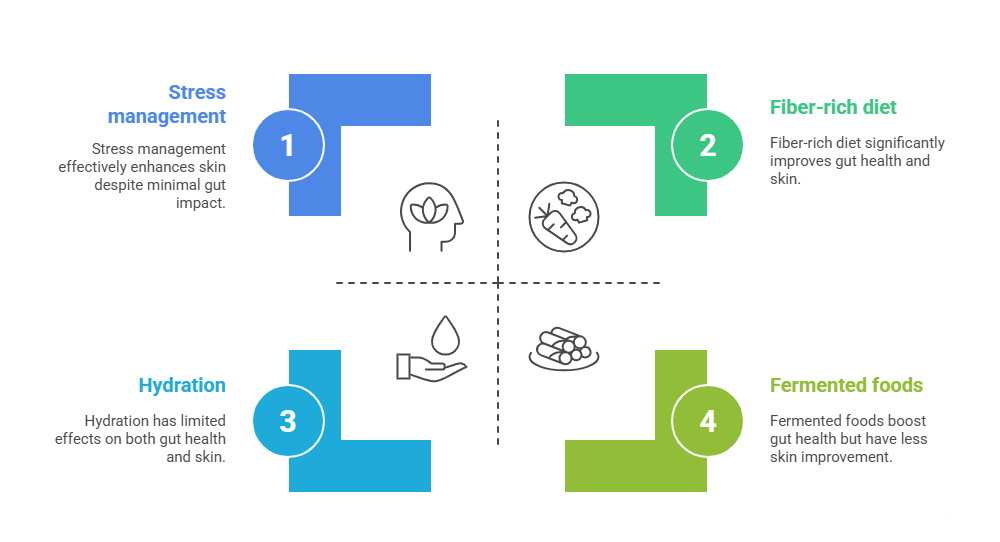
- Eat a fiber-rich, plant-based diet: Focus on whole foods – fruits, vegetables, whole grains, and legumes. These are full of fiber and plant compounds that feed the good gut bacteria. A diverse, fiber-rich diet helps build a balanced microbiome and reduces inflammation. For example, leafy greens, berries, nuts, seeds, and garlic are all great for gut health. (By contrast, ultra-processed foods or sugary snacks feed harmful bacteria and can worsen both gut issues and acne.)
- Include fermented foods or probiotics: Yogurt, kefir, sauerkraut, kimchi, kombucha – these contain live cultures that can boost your gut’s bacterial diversity. Studies suggest fermented foods can improve gut balance, and a healthier microbiome is linked to better skin. If fermented foods aren’t your thing, a daily probiotic supplement (especially strains like Lactobacillus and Bifidobacterium) may help calm inflammation and even fight acne bacteria from the inside out.
- Stay hydrated: Drinking plenty of water keeps your digestion running smoothly and helps maintain the gut lining. Dehydration and constipation can make gut inflammation worse. Aim for at least 8 glasses of water a day.
- Cut down on sugar and junk: High-sugar diets can unbalance gut flora (promoting yeast overgrowth and harmful bacteria). Try to reduce sweets, sodas, and refined carbs. Also consider limiting dairy for a trial period – some people find their acne improves without milk or cheese (since milk hormones can trigger oil production in skin).
- Manage stress: Chronic stress has a powerful effect on the gut. It slows digestion, alters your microbiome, and can increase gut permeability. It also raises stress hormones (like cortisol) that boost oil production in your skin. Find daily ways to relax – deep breathing, yoga, walks in nature, or meditation. In fact, ZOE’s research notes that sleep and stress have almost as much impact on the gut microbiome as diet, so aim for 7–8 hours of quality sleep each night.
- Consider supplements or medical advice: Sometimes a professional can help. If you suspect SIBO or candida, doctors can test for these issues. Supplements like L-glutamine or zinc carnosine support the gut lining; digestive enzymes or bitter herbs can improve digestion. Always check with a healthcare provider before starting any new treatment.
Takeaway: Treat Your Gut, Love Your Skin
Your skin is like a mirror of what’s happening inside. If you treat gut issues early – with diet, lifestyle and possibly probiotics – you often see big improvements in acne. Scientific reviews now agree that healing “from the inside” is a smart acne strategy. By supporting your microbiome and reducing gut-driven inflammation, you can break the cycle of clogged pores and pimples.
In short: don’t just fight acne with creams alone. Give your gut the care it needs. Eat real food, stay hydrated, manage stress, and listen to your body’s clues (like tummy troubles or fatigue). With time, a happy gut can lead to clearer, healthier skin.