
HRT isn’t a magic quick-fix diet pill. In practice, hormone therapy alone won’t make the pounds melt off overnight. Instead, it lays the groundwork for your body to respond better to diet and exercise. Most women only begin to see subtle benefits (more energy, better sleep, improved mood) in the first few weeks. Actual weight changes usually show up later – often after 2–3 months of consistent therapy. In other words, you may not notice much on the scale for a while, and that’s normal. Experts note that real fat loss often takes several months of HRT along with healthy habits.
How HRT Influences Weight
Hormone Replacement Therapy (HRT) restores estrogen (and sometimes progesterone) levels that have dropped in menopause. This helps rebalance metabolism but doesn’t automatically burn fat. In fact, major health sources emphasize that HRT “will not help you lose weight” by itself. Instead, what HRT does is ease menopause symptoms (hot flashes, insomnia, low energy) that often derail diets and workouts. When those symptoms improve, many women feel more motivated to eat well and exercise. HRT may also slightly change fat distribution – shifting weight from the belly toward hips and thighs – without drastic overall weight loss.
In short, think of HRT as a way to remove obstacles to weight management rather than a direct diet drug. It prevents the usual fat gain of menopause, keeping your weight more stable, and it can kickstart your metabolism (for example, one study found HRT “favored weight loss by significantly increasing lipid oxidation after 3 months”). But to actually shrink your waistline, you’ll still need a healthy diet, exercise, and patience.
Timeline: When to Expect Changes
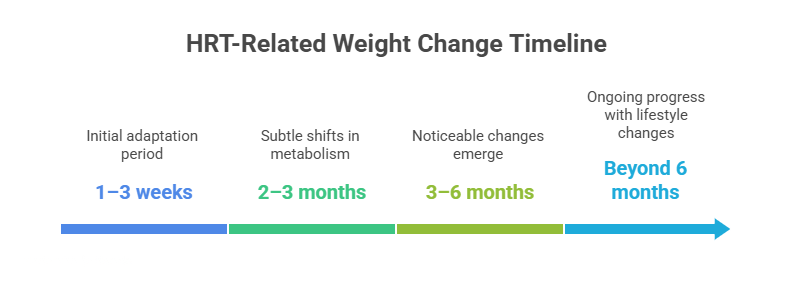
While every body is different, clinicians generally report a slow-and-steady timeline for HRT-related weight changes. Key milestones include:
- 1–3 weeks: You may feel small wins in this period – improved sleep, steadier mood, or more energy. However, weight usually doesn’t change much immediately. Use this time to get into good habits, like better sleep and mild exercise.
- 2–3 months: After about 8–12 weeks, your body has adapted to the new hormone levels. Around this point, subtle shifts begin. Metabolism and fat burning ramp up a bit. In one clinic’s experience, by 3 months women’s bodies showed “significantly increasing lipid oxidation” – in plain terms, they were burning more fat. You might start to notice some loosening in your clothes or a slight decrease in belly fat.
- 3–6 months: This is when noticeable changes often emerge. Many women report gradual fat loss and improved muscle tone during this period. Studies and anecdotal reports consistently point to the 3–6 month mark for real differences. For example, one expert notes that even if you won’t see big weight drops before then, “most sustainable results typically emerge over six months or longer”.
- Beyond 6 months: If HRT is helping your body and you continue healthy eating and exercise, ongoing progress can continue. By six months and beyond, many women see a more defined shape and better body composition than they had pre-HRT. However, gains tend to level off if lifestyle changes aren’t maintained. The key takeaway: weight loss on HRT is gradual – think one to two pounds per month of loss once your body adapts.
Factors That Affect How Fast You’ll See Results
Everyone’s journey is different. Several personal and lifestyle factors can speed up or slow down your weight changes on HRT:
- Age and Metabolism: Metabolism naturally slows as we age. A younger woman on HRT often sees changes sooner than someone in her 50s or 60s. If you’re older, you may need more time (and more lifestyle support) to see the same effects.
- Dietary Habits: Even with hormones balanced, calories and food quality still matter. Eating lots of processed, high-sugar foods will blunt your results. In contrast, a nutrient-rich diet (lean protein, veggies, whole grains) supports metabolism and amplifies HRT’s benefits. As NHS advises, “eat a balanced diet” and it will help manage your weight.
- Physical Activity: Hormones on HRT can enhance muscle growth and fat burning, but you need exercise to activate that. Strength training is especially powerful – building muscle helps burn more calories at rest. Even adding 20 minutes of weight work a few times a week can make a difference. Aerobic exercise (walking, swimming, cycling) also helps use the extra energy HRT gives you.
- Underlying Health: Conditions like hypothyroidism or insulin resistance can make weight loss harder, HRT or not. It’s important to manage any chronic issues (with your doctor’s help) so they don’t hold back your progress.
- Consistency of Therapy: Skipping HRT doses or being irregular will delay results. Hormones work best when blood levels are steady. Take your HRT exactly as prescribed and follow up with your doctor to keep dosages in range.
- Type of HRT: Different HRT methods (pills vs. patches vs. creams) and hormone combinations can have slightly different effects on appetite and metabolism. You may notice different timelines if your doctor adjusts your regimen. The key is to personalize HRT to your needs and keep in close contact with your provider.
In short, HRT sets the stage, but your habits write the play. The faster you adopt a healthy diet and exercise routine, the sooner HRT can tip the scales in your favor.
Tips to Support Weight Loss While on HRT
Exercise and good habits are what make HRT effective for weight. Simple activities – like a happy jog, a brisk walk, or even jumping rope – can amplify the benefits of balanced hormones. Exercise builds muscle (which boosts metabolism) and burns calories; it also takes advantage of the extra energy HRT can give you. Even gentle strength training twice a week can start to show changes in body composition within months.
Beyond moving more, here are other key strategies:
- Eat Whole Foods: Focus on vegetables, fruits, lean proteins, and whole grains. High-fiber foods and protein keep you full longer. Small changes (swapping sugary snacks for fruit, choosing whole wheat over white flour) add up. As one weight-loss expert puts it, think nutrient-dense meals to stabilize blood sugar. This helps your body make the most of HRT.
- Stay Active Every Day: Try to move a little daily. Take short walks, stretch, or do yoga. Break up long sitting periods. These simple habits increase your overall calorie burn and help control weight. Remember, HRT may boost energy – use that extra pep for movement!
- Manage Stress: High stress releases cortisol, a hormone that encourages belly fat storage. Practice relaxation techniques (deep breathing, meditation, hobbies) to keep stress in check. Lower stress means lower cortisol – and fewer barriers to losing weight.
- Prioritize Sleep: Good sleep is often underrated. Poor sleep throws off hunger hormones and blunts fat loss. Since HRT often improves insomnia and night sweats, use this opportunity to re-establish a bedtime routine. Quiet, dark rooms and no screens before bed can improve sleep quality. Better rest helps hormones (and your weight) balance out.
- Track Non-Scale Progress: Scales aren’t everything. Use measurements, how your clothes fit, or even how you feel as success markers. Energy levels, mood, and overall wellbeing often improve before the scale budges. Noticing these wins will keep you motivated.
- Stay Patient and Positive: Remember the timeline. Slow, steady change is normal (and healthier!). One doctor advises thinking of 1–2 pounds of loss per month once you’re fully adjusted to HRT. Celebrate small victories along the way (like more stamina or a tighter waistband), and don’t get discouraged by temporary plateaus.
Finally, keep your healthcare team in the loop. Regular check-ups to monitor your hormone levels and discuss weight management are important. Your doctor may tweak your HRT type/dose or suggest combining HRT with nutrition counseling or medically supervised programs. As UK’s NHS and menopause experts emphasize, HRT should be part of a broader healthy-lifestyle plan, not a stand-alone solution.
Conclusion
In summary, weight loss on HRT is a gradual, ongoing process. You shouldn’t expect a quick transformation. Most sources agree that noticeable weight changes usually take at least a few months of consistent HRT. Many women see only minor shifts at first, with more obvious fat loss showing up around the 3–6 month mark. The very best results come after half a year or longer of therapy combined with healthy diet and exercise.