Taking antibiotics can kill off both harmful and helpful gut bacteria, often causing symptoms like bloating or diarrhea. The good news is that you can help your gut recover by rebuilding good bacteria and feeding them the right foods. Focus on probiotic-rich foods and drinks (which introduce beneficial bacteria) and prebiotic, fiber-filled foods (which feed those bacteria). In practice, this means eating more yogurt, kefir, sauerkraut, kimchi, and other fermented foods, while also adding plenty of fruits, vegetables, whole grains, and beans. Alongside diet changes, stay hydrated, get regular exercise, manage stress, and get enough sleep. These steps together create a supportive environment for your gut microbiome to bounce back after antibiotics.
Why Antibiotics Upset Your Gut
Antibiotics are designed to kill bacteria that make you sick, but they also wipe out friendly gut bacteria in the process. This disruption can lead to an imbalance (dysbiosis) where harmful microbes have room to grow. As a result, it’s common to experience stomach upset or antibiotic-associated diarrhea. Knowing this, the goal is to replenish the good bugs and restore a healthy balance. Research shows your microbiome can recover on its own, but diet and lifestyle choices can speed up recovery.
Include Probiotic and Fermented Foods
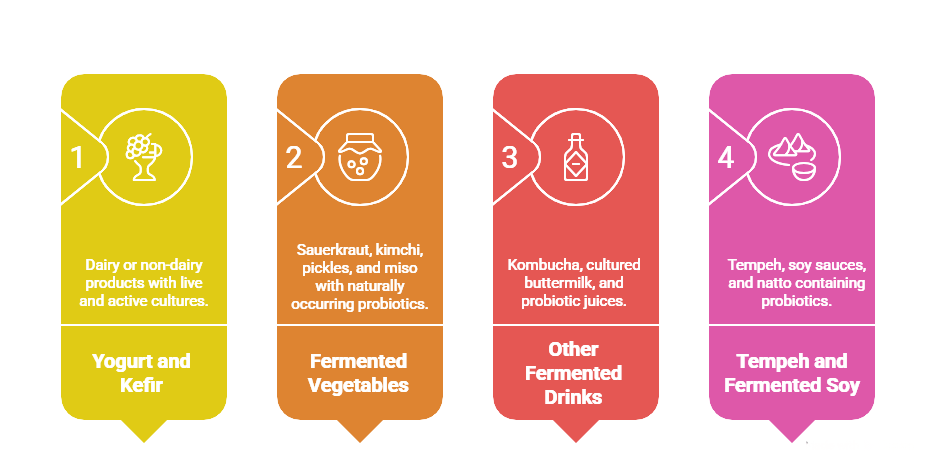
Probiotics are live, beneficial bacteria that support digestion and immunity. After antibiotics, eating probiotic foods helps repopulate good bacteria in your gut. Aim to include a serving or two of these each day:
- Yogurt and kefir: Look for labels saying “live and active cultures”. These dairy (or non-dairy) products contain strains like Lactobacillus and Bifidobacterium.
- Fermented vegetables: Foods like sauerkraut, kimchi, pickles, and miso have naturally occurring probiotics.
- Other fermented drinks: Kombucha, cultured buttermilk, and probiotic juices can also introduce helpful microbes.
- Tempeh and fermented soy: Tempeh and some soy sauces or natto contain probiotics too.
Not only do these foods add back good bacteria, but fermented foods also contain prebiotic fibers that feed probiotics. Introducing a variety of fermented foods helps your gut regain a diverse microbial community. If you prefer supplements, a high-quality probiotic supplement can also be used (especially during antibiotic treatment), but food sources are often most effective. Always talk to your doctor before starting new supplements.
Eat Plenty of Prebiotic and Fiber-Rich Foods
Prebiotics are the fibers and nutrients that feed the good gut bacteria. By eating foods rich in prebiotics, you help the probiotics thrive. Focus on a fiber-rich, plant-based diet, including:
- Whole grains: Oats, barley, whole wheat, and bran contain soluble fibers that feed gut microbes.
- Fruits: Apples, bananas, berries, and pears provide prebiotic fibers like pectin.
- Vegetables: Onions, garlic, leeks, asparagus, artichokes, and chicory are top prebiotic veggies.
- Legumes and beans: Lentils, chickpeas, black beans, and other legumes give both fiber and resistant starch to fuel gut bacteria.
- Nuts and seeds: Flaxseeds, chia seeds, almonds, and pistachios add fiber plus healthy fats.
Eating a rainbow of plant foods feeds different bacterial strains, supporting a balanced microbiome. In fact, research suggests that not getting enough fiber can slow gut recovery after antibiotics, while a high-fiber diet helps protect and rebuild your gut lining. Aim for at least 25–38 grams of fiber per day (depending on age and sex) from fruits, veggies, beans, and whole grains.
Stay Hydrated and Soothe Your Digestive Tract
Drinking enough water is crucial for gut health. Fluids help flush out toxins, keep digestion moving, and maintain the mucosal lining of the intestines. Aim for at least eight 8-ounce glasses of water daily (more if you had diarrhea or exercise a lot). You can also get fluids from herbal teas, broths, and water-rich fruits (watermelon, cucumbers).
Consider sipping on bone broth or clear soups as well. Bone broth is rich in collagen, amino acids (like glutamine), and gelatin, which some experts say can help soothe and repair the gut lining after antibiotics. Chicken or vegetable broth can also be gentle on the stomach if you’re still recovering. In short, drink regularly and include warm broths or soups to stay hydrated and comfort your digestive tract.
Adopt Healthy Lifestyle Habits
Gut recovery isn’t just about food — daily habits matter too. Here are key lifestyle tips to help heal your gut:
- Get enough sleep: Aim for 7–9 hours of good sleep each night. During sleep your body repairs the gut lining and regulates your immune system. Studies show poor sleep can worsen gut imbalance, so stick to a regular sleep schedule.
- Manage stress: Chronic stress releases hormones that can alter gut bacteria and cause inflammation. Simple stress-reduction techniques — like deep breathing, meditation, gentle yoga, or walks in nature — can calm your mind and benefit your gut. Even a few minutes of mindfulness each day can help break the stress–gut issue cycle.
- Exercise regularly: Moderate exercise (walking, cycling, swimming, yoga, etc.) improves gut health by increasing beneficial bacteria. One study found that physical activity can introduce more helpful microbes and protect your microbiome. Aim for 30 minutes most days, but don’t overdo it if you’re still feeling weak. Even light exercise and stretching support digestion and circulation.
Putting these habits into place creates an environment where your gut bacteria can flourish. Every small healthy choice adds up — walking after meals, reducing caffeine or alcohol (both of which can irritate the gut), and avoiding late-night snacks can also help your digestive system settle back into balance.
Avoid Gut-Offending Foods
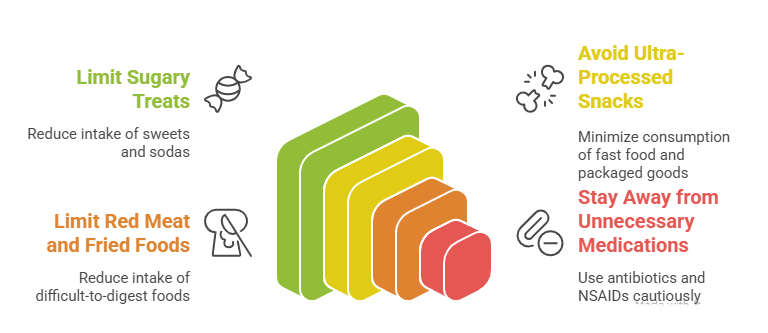
While focusing on good foods, limit or avoid things that can slow recovery. Highly processed foods, artificial sweeteners, and excess sugar can feed harmful bacteria and yeast, making it harder for good microbes to repopulate. Instead:
- Cut back on sugary treats, sodas, and sweets, which can promote yeast overgrowth.
- Avoid or minimize ultra-processed snacks and meals (fast food, chips, packaged goods) that are low in nutrients and fiber.
- Limit red meat and fried foods, as they can be harder to digest and may increase gut inflammation.
- Stay away from unnecessary medications: only take antibiotics when prescribed, and be cautious with frequent NSAIDs (like ibuprofen) or antacids, which can further irritate the gut lining.
By avoiding these gut irritants, you give your beneficial bacteria a better chance to multiply. Think of it like gardening: pull out the weeds (junk food, sugar) so the good plants (probiotics) can grow.
Be Patient — Recovery Takes Time
Remember that healing your gut doesn’t happen overnight. According to digestive health experts, recovery times vary widely. Some people feel better within a few weeks by consistently eating healthily and taking care of themselves, while others (especially after strong or multiple antibiotics) may take a few months to fully bounce back. The good news is that every healthy meal and habit helps.
Keep up the probiotic and prebiotic foods daily, stay hydrated, and stick to your healthy routine. Over time your microbiome will regain its diversity and strength. If you find symptoms (like severe pain, prolonged diarrhea, or weight loss) persist beyond a couple of weeks, check in with your doctor. They can rule out any other issues and may suggest personalized support (like specific supplements or tests).
In summary, restoring gut health after antibiotics involves repopulating beneficial bacteria and nourishing them with fiber and nutrients. By combining a varied, plant-rich diet with good sleep, stress management, hydration, and regular activity, you’re giving your gut the best chance to heal. Stick with these steps, and you’ll help your digestive system — and your whole body — feel good again.